

12 May Universal Locker Rooms in the Medical Fitness industry – A Passing Trend or Here to Stay?
By Hervey Lavoie, Architect & Co-Founder of OLC
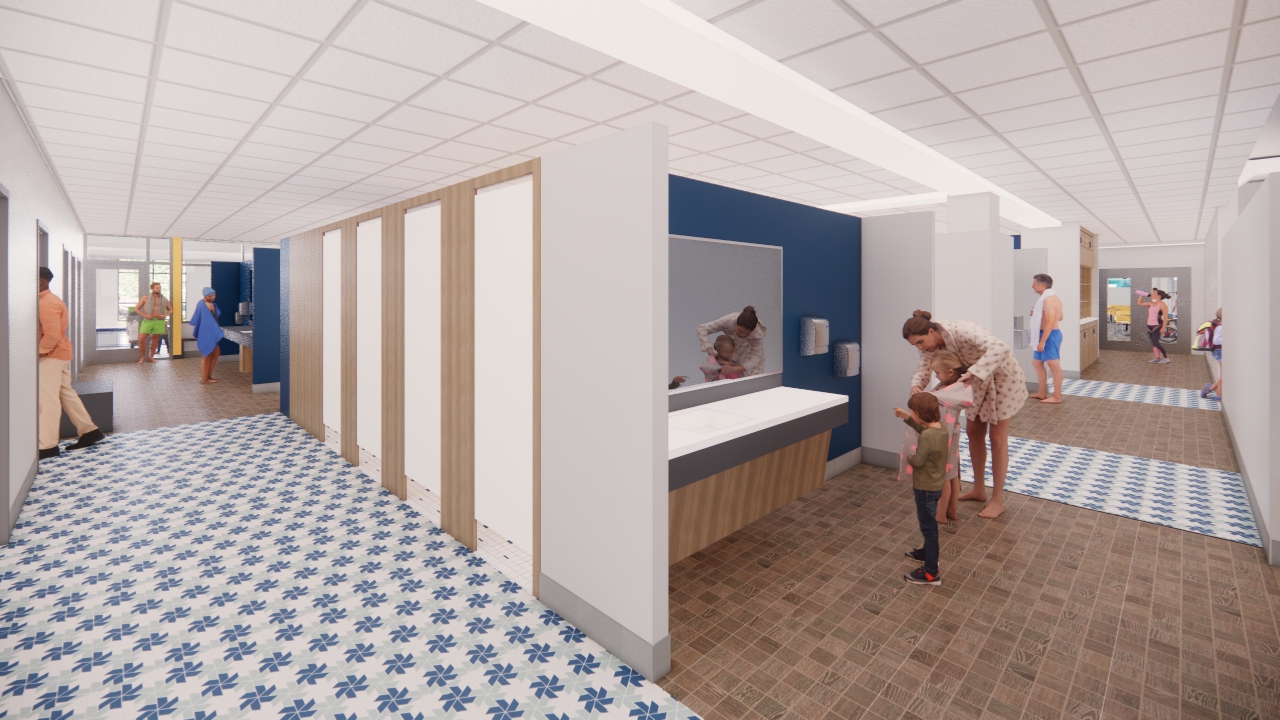
First things first. Let’s define exactly what a Universal Locker Room is. Quite simply, it is a carefully organized, gender-neutral arrangement of individual lockers and vanities that share access to private changing, toileting, and shower compartments. Everyone, regardless of gender identity, is welcome to come in and enjoy complete privacy as they change clothes, take a shower and use a toilet. Universal Locker Rooms are found throughout Europe and Canada. Smaller versions of this concept — often labeled ‘Family Changing’ or ‘Assisted Changing’ — have long been provided alongside traditional men’s and women’s locker rooms.
Questions surrounding privacy, inclusivity, and gender identity continue to influence how wellness and fitness environments are planned. As an architect specializing in Medical Fitness and Sports Performance design, I am seeing more and more movement away from the binary locker room model. Consider these notable trends among users of all such facilities.
- Lower priced facilities often do not even offer locker rooms. Members come dressed and ready to work out. Perhaps only needing a change of shoes and a small locker to store personal items
- Gendered Locker Room lounges, built in anticipation of the long-gone generational desire for locker room social interaction, often sit empty and unused.
- Open communal changing behaviors have declined significantly over the last decade. Many gendered locker rooms have signage requiring bathing suits in jacuzzies, cold plunges, steam rooms and saunas. Gang showers are a thing of the past. Private showers with a separate dressing compartment are now expected even in traditional men’s and women’s locker rooms.
- Facilities with universal locker rooms can better accommodate individuals across a broad spectrum of identities and comfort levels without relying on rigid gender-based protocols. In recent years, the LGBTQ+ community has gained greater acceptance and visibility, reflecting a broader commitment to equal rights, inclusion, and personal freedom for all people.
- With various recovery amenities becoming more popular, the universal locker room allows for a full complement of recovery features – steam, sauna, hot/cold baths, cryo, etc., without the expense of providing duplicate facilities for a pair of gendered locker rooms.
- Members undergoing rehab therapies often require assistance with dressing, and that assistance may best be provided by a spouse.
Medical fitness facilities, in particular, serve a broader and more diverse user base than ever before. These environments are no longer just about exercise. They support rehabilitation, behavioral health, chronic disease management, family recreation, sports performance and multi-generational wellness. With that expanded mission comes a need to create spaces that feel welcoming, safe, and respectful for all users. Universal locker rooms, when done well, aim to respond to that need by prioritizing privacy, flexibility, and inclusivity. Because privacy is delivered on an individual room-by-room basis, the broader locker room environment can become more open, daylit, and welcoming.
The enlightened designer understands that Universal locker room planning must deliver:
- Clear sightlines for staff oversight and member awareness while avoiding hidden corners and unnecessary walls.
- Secure privacy where it is needed. Open, intuitive wayfinding at entries and exits.
- Adequate vanity spacing for hand washing and grooming
- Comfortable circulation around lockers and benches.
- Logical separation between outdoor footwear and barefoot wet zones
- Efficient cleaning and maintenance
- Recognize and optimize all factors that will impact user capacity
- Durable, high-performance, slip-resistant finishes
It is clear to me that Universal locker rooms are not going away and that locker room models will likely continue evolving in response to changing user expectations. The days may be numbered for traditional men’s and women’s locker rooms. The underlying drivers behind universality — inclusivity, privacy, flexibility, efficiency and user comfort — are too significant to ignore. Ultimately, the goal is not to follow a trend, but to create facilities that work operationally, financially, and experientially for the communities they serve.
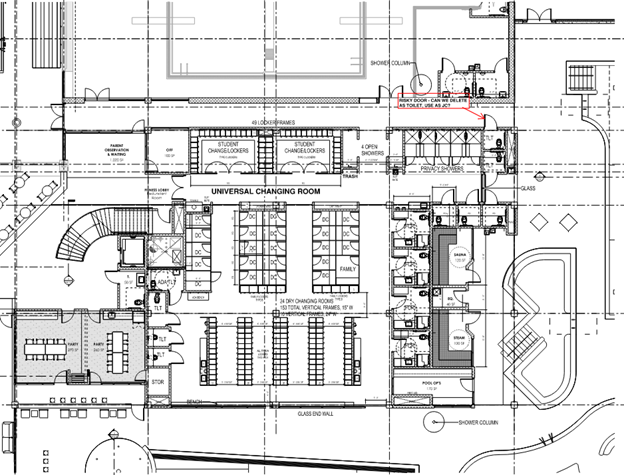 Universal Changing Room, Holland Aquatic Center, Holland, MI

About the Author
Hervey Lavoie is the co-founder and Senior Principal at OLC. In his daily work, Hervey is “hands-on” – actively involved in projects and has team leadership responsibility for design inspiration, client-centered creativity and mission fulfillment. In his 40+ years as a licensed Architect, Hervey has designed in excess of 45 medically-integrated, hospital-affiliated fitness/wellness facilities in the US. In Japan, he led the design of more than 40 fitness centers. Hervey has completed health, fitness, and athletic club design assignments in 47 states and 11 countries.
For additional information contact:
Hervey Lavoie
M: 303.888.8665
E: hlavoie@olcdesigns.com